Sunday, July 19, 2026

Camp Quill and Writing Progress

Tranquil porches and lots of writing. I returned from Camp Quill with gold stars and finished writing projects.

Camp Quill, a writing camp, was just what I needed mid-summer. As I pulled into the retreat's parking lot outside of Marble Falls, Texas, I checked my email to find a rejection of a manuscript. It was not the way I had hoped to start, but I added the project to my list.

Three women pose in front of a Retreat Ranch sign
Dr. Cristi Horton, Dr. Kay Colley and me

Our kick-off keynote, Dr. Edward Janak, was fantastic and helped me immediately reset and reboot. He delivered 11 timely tips for us as we began a writing journey, tying each suggestion to his start in construction. Follow him on LinkedIn — I'm hopeful he'll share all of them there. His reset included thinking of the joy and not necessarily the pressures. He suggested being mindful of your space and environment for writing. The Ranch Retreat created the perfect environment for my writing. I claimed a rocking chair on the porch and typed in cadence with the rain. I also loved being in the vicinity of others typing diligently on their projects. Writing felt more communal and not so lonely.

Me and Junior

A friend likes to tease me that I still crave gold stars. I do. ⭐ So, I brought gold stars to share, and guess what? I'm not the only one. Writers placed their gold star stickers on laptops, phone covers, and their t-shirts. Each one took three stars to go, to self-administer when they accomplish their 30-day, 60-day, and 90-day writing goals.

Me finding writing joy 

A big thank you to Dr. Lora Helvie-Mason and the Morrows (Dr. Chris and Dr. Becky) for organizing an awesome retreat. I also want to give a shout-out to Chef Suki for the amazing food that kept us focused during our writing blocks, because we knew a fabulous and nourishing spread was on the other end of the timer. 

Friday, February 27, 2026

JSMS rides into the archival sunset

Cover image of the Journal of Social Media in Society
Cover of the first issue. 
From 2012 to 2025, the Journal of Social Media in Society has been home to social media research. When we started the journal, finding a home for a project focused on social media and specific platforms was a tougher search. With social media entering its 20s, journals are receptive to articles and scholarship in this area. As such, we have decided to shutter the journal.

So, so, so many people were involved in the creation and continuation of JSMS. Some of our reviewers have been with us since the beginning. That is an amazing service lift, and we are ever grateful for all of our reviewers. Associate editors were added as we plodded along, and they were instrumental in our forward momentum. We have had wonderful editorial assistants, both doctoral and master's students. Our authors always impressed me with their work, but also their kindness. Founding a journal has been a ride, and I am filled with gratitude for the journey. The masthead for the journal is now located in our archived site: https://thejsms.blogspot.com.

ARCHIVE

You can still access all of the fantastic research published in the journal in our online archive. We are also in the process of archiving it with the Public Knowledge Project. OJS/PKP has been a wonderful partner in the publishing process.

TOP TEN

JSMS had 1.1 million abstract views and 893,000 article downloads. To celebrate the 13-year run, we have tallied the most PDFs downloaded and created our Top 10 list. 

  1. Parasocial Interaction in the Digital Age:  An Examination of Relationship Building and the Effectiveness of YouTube Celebrities Vol. 7 No. 1 (2018)
  2. Scrolling, Simping, and Mobilizing Vol. 12 No. 1 (2023)
  3. The Evolution of Social Media from 1969 to 2013: A Change in Competition and a Trend Toward Complementary, Niche Sites Vol. 3 No. 2 (2014)
  4. Internet Dependency and Academic Performance Vol. 4 No. 1 (2015)
  5. The Development of Parasocial Interaction Relationships on YouTube Vol. 7 No. 1 (2018)
  6. Using the PAD (Pleasure, Arousal, and Dominance) Model to Explain Facebook Attitudes and Use Intentions Vol. 6 No. 1 (2017)
  7. An Analysis of George Floyd-themed Memes Vol. 10 No. 2 (2021)
  8. Twitter, Social Support Messages, and the #MeToo Movement Vol. 7 No. 2 (2018)
  9. Effects of Parasocial Interaction with an Instafamous Influencer on Brand Attitudes and Purchase Intentions Vol. 10 No. 1 (2021)
  10. The Looking Glass Lens: Self-concept Changes Due to Social Media Practices Vol. 4 No. 1 (2015)

Friday, January 30, 2026

Research Extravaganza

One article to proof. Then another. And a third. It was a busy winter break checking page proofs for research articles, but I am ever thankful for published scholarly work! My research focuses on helping public relations practitioners and educators navigate digital spaces, concerning technology developments (such as generative AI), organizational listening, and ethical concerns. 

GenAI in the Public and Nonprofit Sectors
Jacqueline Lambiase, Rosalynn Vasquez, and I asked nonprofit and public sector communicators about their planning, training and policies related to GenAI use. The TL;DR version is that 85% were using GenAI in their professional work, but very few had training, discussions, or ethical guidelines. There was a disconnect between what they thought was most important related to AI ethics and what they believed their bosses' main concerns were. We developed a 10-point model for the ethical adoption of new tech for public relations practitioners, as well as adapted an ethical sensitivity scale for public relations.
Maben, S. K., Lambiase, J., & Vasquez, R. A. (2026). Self-starters and lone rangers: Municipal government and nonprofit PR practitioners’ approaches to AI training, ethics, and policy-making. Public Relations Review, 52(1), Article 102664. https://doi.org/10.1016/j.pubrev.2025.102664
Early Coverage of ChatGPT
Lora Helvie-Mason, Prairie Parnell, and I wanted to document how the advent of ChatGPT was covered in the higher education press, specifically The Chronicle of Higher Education.  Using qualitative analysis, we reviewed the initial articles, letters, and briefs written by staff and guest writers for agenda-setting on the technological advancements in generative artificial intelligence (AI), specifically ChatGPT. Primary themes identified in the articles included AI as a tool, AI’s interplay with education, faculty agency and implications, and surveilling students and examining academic integrity. The tone was categorized as informational, instructive, and cautionary. 
Maben, S. K., Helvie-Mason, L. B., & Endres-Parnell, P. (2025). The Chronicle of Higher Education’s initial coverage of the advent of ChatGPT: Navigating generative artificial intelligence. Southwestern Mass Communication Journal, 41(2). https://doi.org/10.58997/vsk7tp50

Emojis in Organizational Social Media Messaging
In a quasi-experimental study with Chris Gearhart, we found that messages with emojis were considered more competent, attention-getting, and engaging than messages without. Emoji sequences also tested well. ๐Ÿธ๐Ÿ’œ๐Ÿ’ฅContext matters, and serious messages should proceed with ⚠️ caution. We didn't find much difference between perceptions based on age, gender, education, etc. 
Gearhart, C. C., & Maben, S. K. (2026). Stakeholder Perceptions of Emoji Appropriateness in Organizational Social Media Messages. International Journal of Strategic Communication, 1–23. https://doi.org/10.1080/1553118X.2025.2596006

Thursday, November 6, 2025

Lead On: Values in Action Week Research, Scholarship & Creative Activities Showcase

 A room full of research! Swoon! That's the benefit of a research showcase -- you are surrounded by inquisitive minds ready to share their findings.

I'm proud to say that my TA, Caroline Conkle, participated in the Lead On: Values in Action Week Research, Scholarship & Creative Activities Showcase. She presented our work with Kay Colley, APR, SCMP, on Accredited Public Relations (APR) professionals who also have doctorates.

An academic poster

Dr. Ashley E. English and I showcased our research investigating the barriers that public sector communicators face when they attempt two-way communication. A special thank you to our Certified Public Communicator® contacts who participated.

An academic poster

Tuesday, July 8, 2025

My Kid Asked Me for a Royal Decree … Enter GenAI

Icon-style illustration of a crowned girl representing imaginative play, surrounded by speech bubbles with a chat symbol and a pencil checking a box, symbolizing generative AI and collaborative editing.
Image created with ChatGPT.

Intentionality and GenAI

My recent research has focused on GenAI ethics—particularly transparency, disclosure, and policy. Alongside that, I’ve begun to ask GenAI to assist with more day-to-day tasks. One such moment happened when my daughter asked me to type up a document transferring her queen title to her best friend, making her the head of a council in Legoville.

At first, I thought, Wow, they’re deeply invested in this imaginative world. My next thought: Where do I even start with a royal decree?

We saddled up to the computer, and I opened ChatGPT.


A Royal Request in Legoville

Then I paused—should I model going straight to GenAI for a document? What best practices could I demonstrate here?

We prompted together and then began editing the output. She had many changes to suggest, and our usage of GenAI fell into the category of “getting us started with a template.” The final print out was a modified version of the initial GenAI draft.

I explained to her why I allowed GenAI usaged for this task:


Why I Chose GenAI

1) The usage was for play.
This was a playful exercise. For more serious applications, I might use GenAI to generate a few examples to get me started or produce a fill-in-the-blank worksheet to help gather relevant content. Still, we discussed how using someone else’s words isn’t the same as writing your own. Also, hallucinations were not going to be a deal-breaker for the queen and her head of council. 

2) I had no idea where to begin with royal decrees.
Before GenAI, where would I have gone for inspiration? Microsoft Word templates? A Google search? An encyclopedia? (Yes, we had World Books in our house—sold by a door-to-door salesperson!). Reflecting on those past options helps me better contextualize my usage today and decide how to proceed. If I had modeled a template from one of those outlets, I feel fine modeling a template from GenAI (and thinking through its accuracy).

3) This was not meant to exercise my brain.
If an activity is designed to challenge my thinking, I engage with it directly before turning to GenAI. For me, writing is thinking. I need that cognitive heavy lifting to organize my thoughts. I acknowledge that this could become a shortcut too easily, where we focus on the output instead of the process.

That’s why I’m teaching my daughter to pause and reflect on her use of GenAI. What thinking might she be bypassing? That pause—that reflective moment—is what I want her (and myself) to remember. Outsourcing is a choice, and one we should make thoughtfully.


Reflecting on My Own Usage

As part of this reflective practice, I asked ChatGPT to create an audit of my own usage. In one response, I received a paragraph-style summary of themes and categories. In another, it returned a table with star ratings showing frequency and even trends over time.

One of my favorite uses of “Chatty” (as I sometimes call it) is turning metadata into APA 7 citations. Formatting citations is not where I want or need to spend my mental energy—it’s not a flex I need right now. But I recognize that beginning graduate students do need to spend some brain time here to learn citation mechanics and accuracy. Once they’ve learned the rules, they’ll be better able to spot-check GenAI’s output. I’ve done that work, and I now use GenAI as a citation generator.


The Final Decree

We printed her royal succession and abdication decree and prepared it for ceremonial signing with her best friend. It was only afterward that I said, “Wait—we forgot to disclose our GenAI usage!”

We’ll let it slide this time, as I’m disclosing it here in this broader reflection.


Final Thoughts: Practicing Intentionality

Whether it’s for a queenly transfer of power in Legoville or a professional writing task, I’m trying to model intentionality in GenAI use. I want to emphasize the importance of asking: Why am I using this tool? What am I gaining—and what might I be giving up?

These small pauses are the key to ethical and thoughtful GenAI use.

How do you think about and maintain intentionality in your own GenAI usage?


GenAI Usage Disclosure: After writing a rough draft of this post, I asked ChatGPT to create a list of suggested edits. I then decided which edits to implement. This is another way for me to be intentional in my usage. 

More about my research


Thursday, August 1, 2024

OER as a way to share student case studies

In my graduate communication ethics course, students consume a lot of case studies and then write one of their own. So many interested cases began to pile up with no reader beyond me. I am a big fan of using OER -- Open Education Resources -- for my courses, and thought why not help our students create one showcasing their ethics case studies. Now into our second volume, I present What If: Ethics Case Studies.

Placard that says What if: Ethics Case Studies

Cases use various philosophies to illustrate how a case can be analyzed weighing principles/values, stakeholders, and facts. Here's a peek at the table of contents:

I am extremely proud of my students for their willingness to share their work with others in the OER format. We have it set up where other instructors can remix cases for their own courses. 

Friday, July 12, 2024

APR: A Journey Toward Accreditation in Public Relations

After earning tenure, I felt like it was time for more professional development. Public relations (PR) practitioner-scholars whom I admire have earned their APRs (accreditation in public relations) and I want to remain competitive in my field. An APR designation signifies an investment and belief in our profession as a profession. Additionally, I want to model lifelong learning and industry commitment to my students. 

Making Herstory - Women's Mentoring Network

As part of the process, you present a campaign you have implemented. Timing worked out perfectly because I was launching a Women's History Month campaign for Tarleton's Women's Mentoring Network. Members’ research efforts were the focus, as this fulfilled the university’s mission to increase our research profile and institutional prominence. We celebrated a Month of Research on LinkedIn. The campaign was a success and provided an campaign for my panel presentation.

After many hours of preparations and studying, I sat for my panel presentation (think dissertation defense). I truly learned a few things along the way. For example, my objectives needed to be pushed beyond output measures. 

After passing the panel presentation (thank you to the APRs who gave their time for the evaluation and feedback), I prepared for the written exam. The PRSA-provided study guide is a great starting point. Many of the suggested textbooks are ones I've used as a teacher over the past 20 years. Nonetheless, I studied and studied. 

APR Panel Presentation Title Slide

Next, it was test time. I spent hours glued to my chair taking an online exam while a proctor watched over my webcam and screenshare. It was a beast. The moment I hit submit, I held my breath and hoped for the PASS notification. I had to re-read it several times before my brain would believe that I had passed. 

I have many thank you notes to issue. To my APR mentor Dr. Kay Colley, APR, you are the best! Last year, she presented at a monthly PRSA meeting and forced us to consider one-year and five-year goals. I put APR on the notecard she handed me for my one-year goal. To Dr. Julie O'Neil, APR, who shared about her experience that same day and helped me make the leap. To Jeremy Agor, APR, our APR chair, who shepherded the process. To Jessamy Brown, APR, for her expertise on my panel. To all the APRs who came before and may not even know that they influenced my decision -- Kim Brown, APR, our PRSA chapter president, Dr. Amiso George, APR, Dr. Katie Place, APR, Dr. LaShonda Eaddy, APR, Jeff Wilson, APR, and many more -- thank you!

If you are thinking about pursuing your APR, I'm happy to share my experiences. 

Friday, June 14, 2024

Public and nonprofit sector communications: AI in your roles

AI-generated networked brain line art in purples and black
AI-generated art.
Dr. Jacqueline Lambiase, TCU, Dr. Rosalynn Vasquez, Baylor, and I are looking at GenAI and communicators in the public and nonprofit sectors. If you're a communicator in these sectors, we would love your input. 

Survey link

IRB on file at the university.


Wednesday, August 30, 2023

Creating Colleagues - Grad Students Empowered

Line art representing research collaborations
Image created by Bing Image Creator with the following prompt:
Create an icon for a blog article on research colleagues

This summer I had the chance to work on an interdisciplinary research team for a Presidential Grant at Tarleton State. Communication and criminal justice faculty and graduate students dove into a study on AI and group texting implications. The study is interesting and I'll talk more about it later, but one huge advantage to this process struck me yesterday. 

On a Zoom debrief, I watched as our two graduate students developed into researchers and colleagues over the summer. They conducted interviews with our majors about ChatGPT and GroupMe perceptions and through the process, they created a tight network to accomplish their goals. 

I left the Zoom smiling because our grad students had become colleagues and researchers. One is a doctoral student in Criminal Justice and the other a master's student in Communication Studies. I am so proud of their progress and thankful for the reminder that much of graduate school consists of the experiences and the connections made through those experiences. I find so much joy from working with colleagues (like Dr. Dobbs and Dr. Wang on this project) and was thankful our students found connections, too! 

Pursuing grants and faculty-student interdisciplinary projects are engines for so much that is valuable... the faculty-faculty connections, faculty-student connections, socialization of the research process for our students (READ: real projects have bumps along the way), student-student connections, research output, future grant possibilities, etc. This is a gentle reminder to self that the time necessary to organize and apply for these experiences is WORTH it!

Here is the project abstract: In this project, an interdisciplinary team will use a mixed-methods research design to investigate student perceptions, motivations, and justifications for cheating and cyberbullying via technology. Specifically, the researchers will use surveys and interviews to learn more about how students view and use group texting platforms like GroupMe and artificial intelligence aids like ChatGPT. This pilot study begins a line of inquiry and hopes to expand data collection from multiple institutions, as well as create a faculty companion survey about their perceptions. Findings will be used to inform professors and universities about these emerging online phenomena and begin to build best practices, professional development sessions, and policy recommendations. The research will expand the body of knowledge to newer technologies, collective academic dishonesty, and artificial intelligence. This project will build upon both communication and criminal justice theories and conclude with discussions on practical and theoretical implications.

And I'll update as we have more to share!

This project is funded by the Tarleton State University President’s Excellence in Research Scholars initiative. 

Wednesday, November 9, 2022

SWECJMC - A Yearly Favorite

One of my favorite conferences is the Southwest Education Council for Journalism and Mass Communication's (SWECJMC) Annual Research Symposium. After virtual meetings, it was lovely to be face-to-face again! The Baylor University team was an awesome host. The Friday afternoon crew is pictured below at the Baylor Research and Innovation Collaborative (BRIC).

SWECJMC attendees

Research presentations interest me, but the panels are where I scribble notes to bring back to my own program. Here are some of my notes to self:

  • Some programs are integrating AR, VR, and AI through digital clubs. "Playing" with the tools (like an Amazon Deep Racer) is OK as we explore what they can mean for news and brands.
  • TikTok is a quick way to introduce AR filters.
  • Writing Alexa scripts and working through AWS could be a good resume and skills boost.
  • Programming a chatbot might be a good way to work through FAQs and think of stakeholders and target audiences.
  • One faculty member encourages students to explore new technology and apps by assigning a project where they must find a new XYZ, teach themselves and then teach him. 
Another thing I love about SWECJMC is catching up with colleagues. Dr. George Daniels, University of Alabama, and I celebrated 22 years since our days at the University of Georgia! And I met Jon Zmikly, Texas State, after about a 10-year virtual friendship. I also met new friends and research colleagues and witnessed so many great presentations by graduate students who will be joining the faculty ranks soon. 

See you in Jonesboro, Ark., next year! 


Tuesday, July 5, 2022

For the love of grading

A new assignment gave me new grading life! Instead of a final paper, I gave students the option of creating a podcast episode or vlog on a topic of their choosing related to tourism, travel, and hospitality as an industry.

I had fun grading and even found that I began to just listen to the projects as an interested listener as opposed to a rubric-minded red-pen-handed teacher.

Art with graded paper and school supplies and says For the Love of Grading

With ample opportunities to practice their writing already, I made space for another creative vehicle they could use to showcase their understanding and learning. The assignment still met our learning objectives; it required research, critically analyzing a topic, organizing the material for an audience, and presenting.

The podcast/vlog assignment infused our class with a creative outlet and encouraged students to find/learn/use technology as a tool. They had to really think about their audience and universal design/accessibility in their content creation (adding captions). 

Students really got into the project. Some created b-roll for their backgrounds and others created show graphics for their new podcast. A few said how much fun they had and discovered a passion for podcasting. One said she might even keep adding episodes to her show. Students can add this project to electronic portfolios and share their work more broadly. Here are the details I gave them. Feel free to adapt it to your needs.

Assignment Details

You will take one aspect of the TTH industry you’d like to investigate further. Or you can present a sales presentation on a property or destination. Or you can interview someone working in the TTH industry.

You will present your findings and discoveries as a podcast or vlog (video blog) of 5-8 minutes, complete with script so it can be universal design and captioned. This should be your own original work and can be included in your e-portfolio. And if it's a show-stopper, we could place it on the department's YouTube or Comm Speaks podcast (with your permission - and permission of any of your guests).

Industry-specific podcasts for ideas and inspiration: https://www.allintheindustry.com/ or https://www.slicktalkthepodcast.com/podcast 

Here's a list of 15 best travel podcasts: https://discoverpods.com/travel-podcasts/ 

Ideas (you can use one of these or come up with something that interests you):

  • Investigate further a type of tourism
  • Dive into one of the Elizabeth Becker's destinations and give a "where are they now" update
  • Analyze your own town's tourism efforts
  • Take a topic from our OER and see how another country compares to Canada
  • How to be a responsible tourist
  • The future of a piece of the travel/tourism industry
  • Interview someone who works in the industry

You can use free podcasting tools or in Canvas, head to Studio. You can make a vlog with screen-in-screen, or you can tell it audio-only. Consume a few vlogs or podcasts to get a feel for the medium. Work from a script or at least an outline of what you want to talk about. If you don't, you might wander and your listener will get lost. Practicing just a little will help you estimate your time. 5-8 mins. flies once you get going.

Here are some great tips about planning an episode of a podcast (or vlog): https://improvepodcast.com/9-key-tips-on-how-to-plan-podcast-episodes/

  • Introduce yourself and your topic to your audience.
  • Talk about your topic and what you want to share with the listener.
  • Orally cite sources like ... "the number of tourists increased 10 fold according to an article in The New York Times." 
  • Make your points.
  • Use conversational language.
  • Have an exit strategy. You don't want the awkward "um, bye" (that I do on my weekly welcome videos!) Thank your listeners and if you have a regular show, invite them to the next one. 

Topics to Avoid - please steer away from these kinds of ideas because I want you to take a larger, industry look.
-My Trip to ____________
-Top X things to do in _________

TURN IN: You'll turn in both the vlog/podcast (upload or a link) and your script that could be used to caption it.

Sunday, May 1, 2022

When students need a break

Reading your audience is something we teach in communication courses. As teachers, we are constantly scanning for understanding and confusion on faces or Zoom screens — gauging our audience. So when a more vocal student tells you that students are tired and you see an entire class or screen of nodding heads, you listen.

This happened in a recent graduate seminar. At about the 10-week mark, students were stressing beyond their normal stress. A student messaged me that they needed a break. So, during class I asked them how the semester was going and they said they were exhausted. I felt it, too. The ongoing pandemic and a drama-filled semester can do that. 

Says: It's time for a break

I thought about just canceling a class meeting to give them time for self-care or whatever they most needed. Instead, I offered them brief one-on-one consultations over a two-week period. They could use that time to chat about their final project, vent, or just pick my brain. They selected their time to Zoom in on a Google Doc. They received individualized instruction and got some time back to handle however they most needed. It was wonderful to have focused time with each one of them and get a truer sense for what they needed related to our class, our program, and their career path. 

Sometimes, we just need a switch-up, something different for a class. Maybe it's a break or maybe it's one of these ideas:

  • One-on-one consultations--This works well for courses with a large project or with seniors or graduate students who may also be seeking career and program advice.
  • Guest speakers--Sometimes, the constant that needs to change is us. A new voice, even if it's saying the same words we say, can resonate. Or have students step into the role of the professor. My daughter's kindergarten teacher used this tactic and it made my little feel so important. 
  • Change your modality/location--With so many schools set up for an easy pivot (you're tired of this word, I know), you could meet online for a class. Make a quick trip to the library for APA review. Or did you ever have a teacher who would take you outside? I loved that. I have designs on an evening sunset meeting at our Fort Worth campus where grad students bring lawn chairs and we have a "campfire" class. It's such a beautiful view on the prairie and lends itself to a philosophical chat about communication ethics.
  • Change your format--Do you normally use a lecture method? Switch to a facilitator model or open discussion format. One evening I simply ditched my PowerPoint and started a discussion. Our grad students found the change of pace refreshing.

What do you do when you or your students just need a break?

<<Written in a past semester>>

Tuesday, April 19, 2022

Educational Excellence Week - Notes and Takeaways

I love a presentation with takeaways I can implement immediately. If your campus has an Educational Excellence Week, your fellow teachers will load you up with their favorite tips and tricks to improve your teaching right now.  Scott January, an instructional designer at Tarleton, had me taking all kinds of notes this morning at our EEWeek in his presentation for making courses more accessible.

A computer with a refreshable braille display.
Photo by Elizabeth Woolner on Unsplash
  • Use Headers in blocks of text. This helps those using a screen reader to jump from header to header. In Canvas, you can find the set headers under the Paragraph section. In Word, you're looking for the headings in the Styles gallery.
  • Customized hyperlinks prevent a screen reader from having to announce a horrible list of characters and letters. Just highlight the words in a sentence you want linked to and engage the link system in Canvas or Word. See the last bullet for an example. And it makes the page look cleaner for everyone.
  • Accessibility Checkers: Canvas has an automatic ADA checker; it looks like a circle with a body inside. Word has one, too! Look under the Review Tab.
  • In Word and Canvas, use the list function to create lists so a screen reader will acknowledge the list.
  • Alternative Text or alt tags are easy and make a huge difference for someone listening to a screen reader. It's basically an embedded description of a visual. Did you know Word lets you add alt tags?
Scott called it "Digital Equity" and using Universal Design can help all learners. 

Monday, April 4, 2022

Panel Power!


Four women at a conference

The 2022 Texas Women in Higher Education conference was a great event! I was especially proud to present on mentoring with Dr. Therese Pennell, Skyla Claxton, and Dr. Rochelle Gregory. Don't you just love it when a plan comes together?! You never know if a panel will gel and this one did. 

Our participants really open up and shared their challenges and mentoring successes. It was as good as you could hope for -- when time is up and no one wants to run to the luncheon immediately. 

In the "it's a small world" category, we discovered that each of us had Tarleton State connections. Dr. Pennell and I know each other and teach in the same college. Skyla and Dr. Gregory have Tarleton master's degrees.

After two years of virtual-only attendance, I found the renewal and networking of a face-to-face conference to be exactly what I needed for the end-of-the-semester slide.

Until next year, TWHE! See you in Denton.

Thursday, January 13, 2022

Resource Share - AHB's Manuscript Recipe

Dr. Amber Harris Bozer avatar

One of my colleagues has launched a website full of resources that can help us all. Dr. Amber Harris Bozer is one cool cat. I love this neuroscientist's passion for sharing and learning! As Associate Editor for the Journal of Social Media in Society, she created an entire how-to manual for our editorial team. And now, she's creating and curating how-to's for researchers at all stages.

Dr. Harris Bozer's ability to organize and outline processes is one to emulate. On her website, she has a Manuscript Recipe that might help you as you revamp an article or strike out on your first one, step by step. You'll also find a timeline for thesis/dissertation committees that will guide chairs and students alike. She has it all for you to download, adapt, and share some more. 

Monday, December 13, 2021

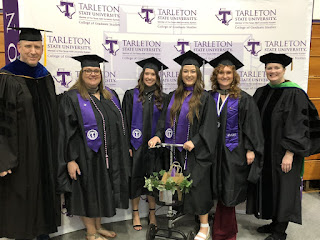
Commencement 2021 - New MAs


6 people in graduation regalia

Don't you just love Commencement!?! It's such a happy time and one of such pride. Pictured here are our master's students who graduated this semester and my colleague Dr. Paul Stafford. Comprehensive exams were bad enough in a regular year, but can you imagine tackling graduate school hoops during a pandemic? These grads have such bright futures and that's what commencement is about for me -- the next step and more possibilities, from pursing doctorates to launching new businesses to new discovering locations! Onward, Texans! ๐Ÿ’œ

Wednesday, September 29, 2021

Free Article: Stakeholder Expectations for Social Media Listening

Dr. Chris Gearhart and I merged our research interests to tackle what stakeholders expect in listening (and responding) in social media dialog. We found that higher active-empathic responses were rated as more competent and offer some ideas for social media managers. 

Here's a link to free copies of our research. Enjoy!

https://www.tandfonline.com/eprint/PMVI4NAQXJRYRICJH8GK/full?target=10.1080/10904018.2019.1602046

Gearhart, C. C., & Maben, S. K. (2021). Active and empathic listening in social media: What do stakeholders really expect. International Journal of Listening, 35(3), 166-187. DOI: 10.1080/10904018.2019.1602046

Tuesday, August 10, 2021

Summer of...

When I think of summer progress, I first consider items marked off a to-do list and manuscripts shipped off for publication consideration. But progress is also the things we've learned along the way. 

  • This summer I dove into Nvivo with a friend's help. We are analyzing social media messages from a particular hashtag campaign. Being in the role of the learner is wonderful because we need reminders of what our students feel like when they start a new endeavor in our classes.
  • I jumped into literature about academic mothering and life writing. We are told to find our research areas and not to stray too far, but there is something refreshing about striking out into a new area. 
  • I am reminded about how much I love to write and design. Writing makes me feel like myself and designing gives me a creative outlet. I tend to forget to cultivate these areas in the long semesters. 
  • I tried a new mantra...finish three main to-do list items. For me, it worked. I was able to disconnect at the end of my workday more easily than before.

While it's great to complete grant work and set lofty goals for the next academic year, taking a little time to reflect on what I've learned about myself is valuable as well. 

With only a week left, what are you learning this summer?

Monday, March 15, 2021

Promote Yourself - PR Primer for Academics

News Flash - You are an expert. As an academic, you are an expert within your field. Building your research profile should include some publicity for yourself. It helps you, your department, and your university.

I know, you need one more thing to do. You're already researching and writing, just add a few tasks to the end of each project to-do list.

  1. Write a news release about your research in progress and when you land a publication or present. Send it to your university's media relations team. Even if it doesn't land a big TV news story, placement on the university news page helps your SEO. Need help? Look for a PR writing course on your campus. Students love real-world projects they can include in their portfolios.
  2. Adapt your research into a public-friendly blog post. Send it to your department, center for teaching excellence, research and innovation office, library, and university publicity office with no. 3. The publicity office will LOVE you for helping them do their work. They need content for their magazines, online newsletters, and social media outlets! Our library likes to create displays of faculty research. It's nice when they don't have to hunt down what they need.
  3. Make it visual. Anyone can use Canva.com or a free infographic builder. The hard part of boiling down your work down. 
  4. Take pictures at conferences. Aim for the highest resolution you can, and action shots would be even better. Images and graphics are helpful to your university marketing team when they are trying to put together a publication or a gray web page.
  5. Share your research synopsis and graphic on your own social accounts. If you don't like tooting your own horn, thank your grantor and laud your student-writers and co-authors for their work.
  6. Update your university web page (and all of your academic accounts like ResearchGate, etc.) and add areas of expertise as needed to your web bios.

Now, every university is different. See what is acceptable at yours and ask senior researchers about these ideas and your local points of contact. 

You say, "But, I don't want to look like an arrogant snot." I hear that, but picture this. The university PR team is staring at a list of hundreds of faculty members. They have no idea what everyone is doing. They can't. That's a lot of hunting and individual contacts to build. You can help them by bringing content to them. 

Friday, February 12, 2021

Stop, collaborate and research

When looking back at the past 10 years of research, I was amazed at the number of collaborators I have been lucky enough to work with on various projects. I may have received an award from my college for my scholarship, but I accept it on their behalf. It would not have happened without my partners in research and cheerleaders along the way.

Dr. Sarah Maben award picture
On Facebook, I said my research journey started with my dissertation advisor, Dr. Kathleen Whitson, but I neglected to mention Dr. Daniel Chen, who tried to impart the importance of strong research questions in one of our doctoral research courses. So, there's two people acknowledged. Only 28 co-authors left to thank! 

Then there are all of the journal editors and their anonymous team of reviewers, from the ones that have rejected my work, but made it better with reviews -- and the ones who have suggested needed improvements and worked through multiple revisions.

My research agenda started with a focus on experiential learning in student-run communication organizations and returns there every so often. Adding to that is social media research and most recently listening in social media. Collaborations led me to new efforts like case studies in ethics, mentoring projects, and Scholarship of Teaching and Learning (SOTL) papers and presentations. 

I am grateful for these opportunities because they have informed my teaching. In grad school, you hear about how research is part of the professor's job because it informs your teaching and expands the body of literature. Every project has added something to what I bring to the classroom. 

So, thank you, Academy, for this honor.  Oh, and I forgot the most important: thank you to my family who puts up with writing frenzies stealing me away from time to time.